Part 5 of 9 · Supplier checks for buyers
A factory that breathes.
What “green” actually means on our floor — and on our packing bench
“Green factory” is one of the most overused phrases in manufacturing. Almost every supplier has a slide about sustainability. Few can show you where it actually shows up in their building.
If you are trying to separate real environmental discipline from greenwashing, look for three things: where the power comes from, how the material is sourced, and where the supplier is honest about limits.
The power that runs the presses
Our electricity has been 100% green since 2024, certified, with no coal in our mains. We started the transition in 2018. That means every kilogram of parts we ship now carries a lower carbon footprint than the same part made on a standard grid.
We do not claim zero carbon. Green electricity is not the same as no electricity. But it is a measurable reduction, and the certificate is auditable. That distinction matters: a buyer should be able to ask for proof and get a document, not a slogan.
The material has to earn its place
Recycled compound is only as good as the system around it. We source from two independently certified suppliers, not from our own scrap bin. Before any new lot enters production, it runs through a 14-item reliability suite — sweat, salt spray, alcohol rub, UV ageing, drop, cyclic load — and every item has to pass before we press go.
That is the difference between “we use recycled material” and “we can prove the recycled material works for your part.” One is a claim. The other is a process.
If you want the full picture on how we keep recycled compound stable, see Part 3 of this series.
Even the bag is part of the statement
Sustainability is not just what is inside the part. It is also what the part ships in.
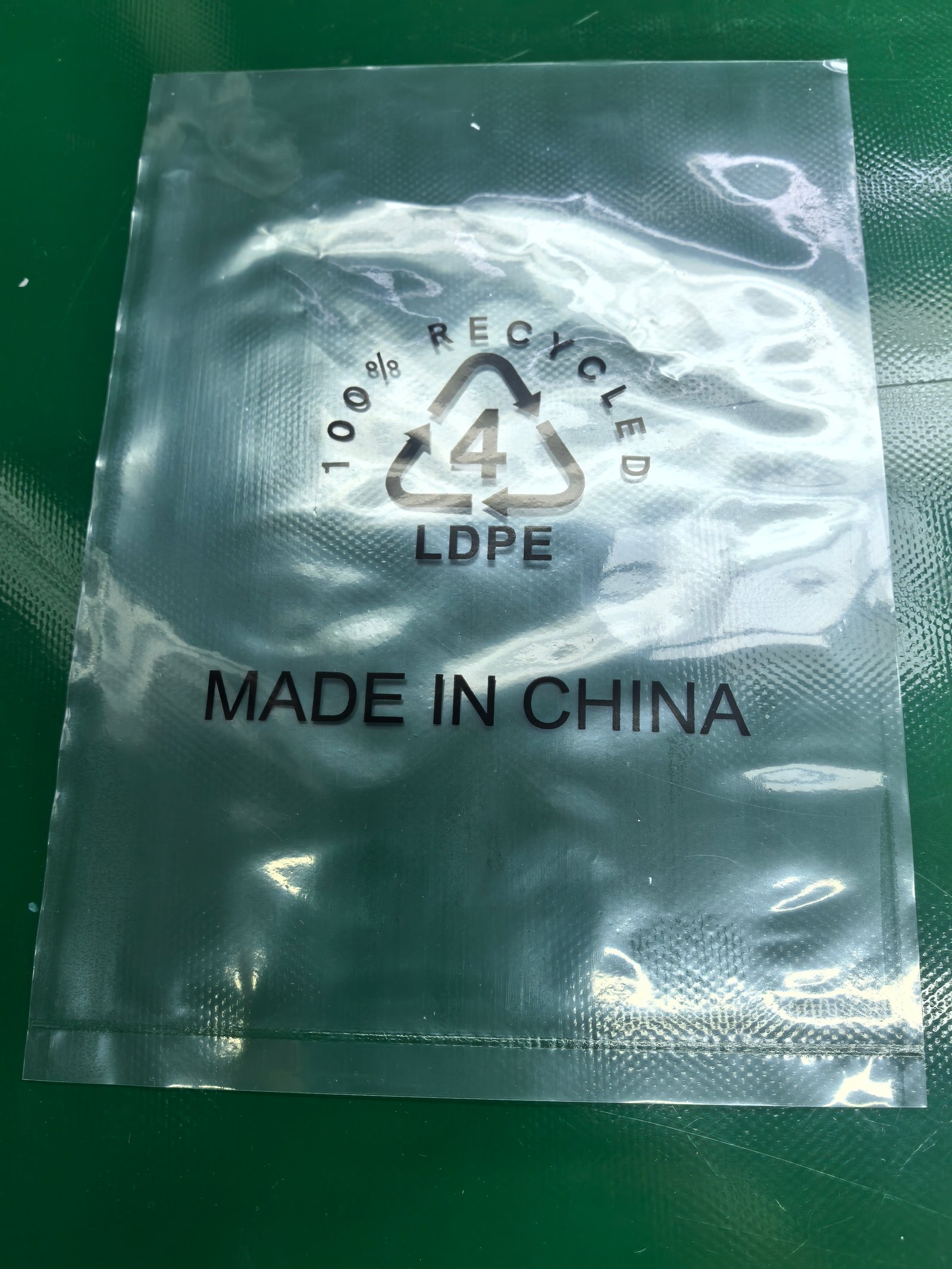
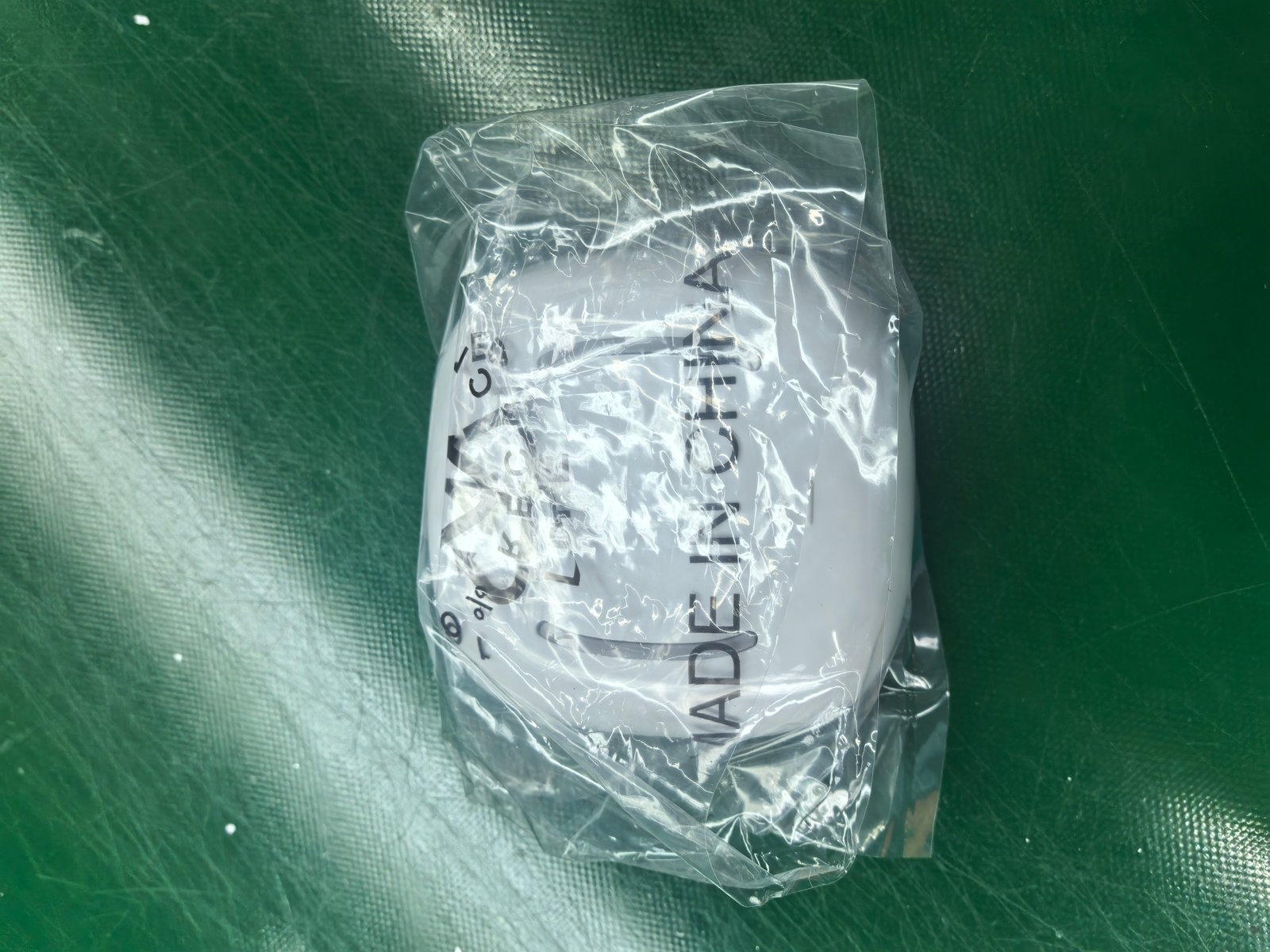
Our shipping bags are 100% recycled LDPE. It says so right on the film — “100% RECYCLED” plus the resin code 4 triangle. That is a small detail, but it is a visible one. A factory that bothers to source recycled packaging is usually a factory that thinks about waste in places a buyer would never ask about.
The bag and the part are not the same rigor. Packaging LDPE is a forgiving application. A medical-device shell or a tight-tolerance structural part is not. The philosophy is the same — use less virgin material where it makes sense — but the engineering discipline is very different. We do not confuse the two.
Where we say no
Green is not always the right answer. Some specs demand virgin-only resin. Some parts have optical or cosmetic windows where recycled lot variation would show. In those cases, the honest call is to make the part in virgin material.
A supplier that always says yes to “green” is not necessarily a green supplier. They might just be a supplier that will take the order and sort out the failure later. We would rather lose a part than ship a part that fails.
What to ask your supplier
- Can you show me the green-electricity certificate for the plant?
- Where does your recycled material come from, and what incoming tests do you run?
- Are there jobs where you will not use recycled material? How do you decide?
If the answers are specific, you are probably talking to a factory that has thought it through. If the answers are vague, “green” is probably just a marketing color.
Lower carbon, same standard
Sustainability only works if it does not come at the cost of quality. Our job is to make the lower-carbon choice the reliable choice — whether that means certified green power, traceable recycled compound, or a shipping bag that carries its own proof.
See how that responsibility shows up on our floor at our sustainability page and how it connects to our quality system at our quality page, and what our process actually covers at our capabilities page. When you are ready to talk about your next project, start here.
Tip 4 in this series: We do not guess. We measure. — how precision is held by measurement, not by machine list.
Li-An Bo is a custom injection molder serving European buyers. These field notes are a starting point if you are vetting a supplier — walk the floor with us before you commit.
Leave a Reply